Six years ago, Catherine Pederson, PhD, launched Loving Venti, a nonprofit consultant practice that works with small-to-medium sized nonprofits on strategy, coaching and fund development.
“One of the biggest things we are working with them on is how to build relationships and connections and find who is a good fit in the fund development arena,” said Pederson, who serves as CEO and a nonprofit consultant.
Loving Venti tries to be behind the scenes as much as possible, she said, acting as the bridge between portfolio managers and nonprofits. When working with the Greater Milwaukee Foundation, Pederson takes full advantage of office hours with portfolio managers, a newer resource that launched several years ago.
“Office hours have been a tool that we’ve used with every single nonprofit as an entry into the foundation world because most foundations don’t open their doors for a young or new nonprofit to go and ask questions of them,” Pederson said.
Dani Breen, senior portfolio manager at the Foundation, helped launch open office hours to personalize connections between nonprofits and portfolio managers, demystify the grantmaking process and connect organizations doing similar work.
“As a community foundation, we exist to serve our community and the vehicle through which we do that is our nonprofits,” Breen said. “Making sure we have trusting relationships and nonprofits have the opportunity to engage with us is important. It also creates an avenue of equity.”
Growing complementary resources
The Foundation offers several supplemental resources to nonprofits. In 2025, 57 percent of grantees received assistance beyond the grant, compared to 16 percent in 2021, according to research the Foundation commissioned through the Center for Effective Philanthropy.
“While grants are always a priority for nonprofits, we also are often asked about other resources nonprofit staff might leverage to further their missions,” Carrie Scholz, director of community leadership, said. “By spending time with nonprofit staff, we work to better understand their needs, opportunities and offer potential resources. We strive to show up as a partner rather than a transactional grant maker.”
Resources the Foundation offers include:
- Catchafire – A national based tool, Catchafire helps nonprofits build organizational capacity. Nonprofits can connect with volunteer experts to get help with solving organizational challenges or brainstorming ideas. Or they can receive pro bono support on 150 different types of projects from marketing campaigns and brand messaging to website construction and more.
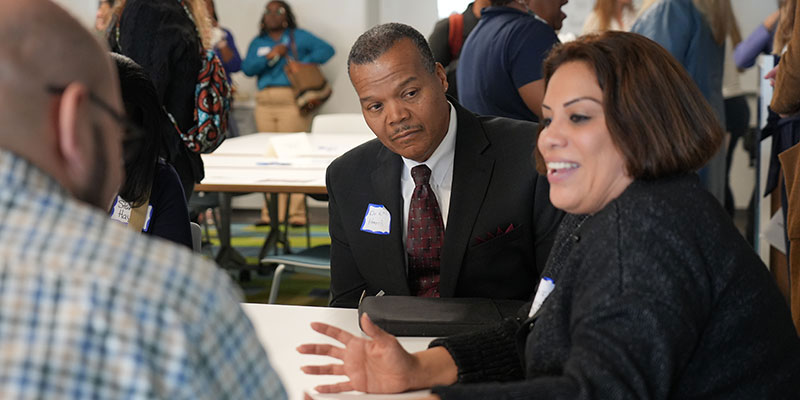
- Portfolio Manager Office Hours – Offered three times a year before each grant cycle, open office portfolio hours offer nonprofits a chance to engage with Foundation staff from Community Impact and Development and Philanthropic Services, get questions answered, connect with one another and learn about the process.
- Nonprofit Management Fund – Housed at the Foundation, this resource provides capacity-building grants for technical assistance and resources to strengthen nonprofit governance, planning, training and assessment across Milwaukee, Ozaukee, Waukesha and Washington counties.
- Funding Opportunities Newsletter – A periodic newsletter designed to keep nonprofit partners up to date on the Foundation’s current funding priorities and grantmaking deadlines. Later this year, subscribers will receive an supplementary email sharing additional resources, tools and tips beyond the grant.
- PEEP (Party to Enhance Equity in Philanthropy) – An unofficial resource of the Foundation and other supporting funders, PEEP offers a chance for staff from nonprofits and philanthropic organizations to connect in a more casual setting and to create relationships outside of the traditional funder and grantee dynamics.
- Community Bridge – Launching this year, Community Bridge is a nonprofit directory that provides a categorized listing of nonprofits and their current funding needs. The goal is to help nonprofits engage with donors to increase their reach and support their goals.
Resources in action
In partnership with the Burke Foundation, Northwestern Mutual Foundation, Siebert Lutheran Foundation and Zilber Family Foundation, the Greater Milwaukee Foundation formed the Greater Milwaukee Partnership and brought Catchafire to Milwaukee in 2021.
“In conversations with nonprofits, I consistently heard that while funding is critical, many organizations are stretched thin and need support beyond the check,” Darlene Russell, director of community engagement at the Foundation, said. “When I first shared the idea of Catchafire with nonprofits, I could hear the excitement in their voices.”
Through the Greater Milwaukee Partnership, 150 nonprofits were invited to register and partake in the program. According to Catchafire, during the first four years, volunteers dedicated over 4,700 hours which equates to nearly $1 million in value for Milwaukee-based nonprofits.
Susan Schroeter, senior development associate for Kinship Community Food Center, tapped into CatchaFire’s Post a Call feature, which connects nonprofits with a volunteer expert to discuss various ideas.
“Having this outside expertise makes you think about things differently,” she said. “I’ve done the phone calls to think about how we tell our story a little bit differently…how we show our programs are growing rather than just saying these are the numbers.”
Currently, Catchafire is helping Kinship with a database customization to connect more easily with donors and organizations.
“It’s really great that this resource is offered for free to nonprofits,” Schroeter said. “It’s great that funders trust us to do our jobs and give us these resources to help us do the work that we do in our communities.”
Currently, Greater Milwaukee Foundation, Zilber Family Foundation and Bader Philanthropies serve as the funder support for Catchafire.
“Catchafire has deepened trust by signaling that we value nonprofits as experts in their own work,” Russell said. “Rather than prescribing solutions, we provide access to a tool that allows organizations to determine what support will be most useful to them. This approach aligns with trust-based philanthropy and reinforces our role as a partner invested in nonprofits’ long-term success, not just as a funder.”