An unexpected car repair. A costly, unplanned medical procedure. A sudden job loss that prevents one from paying a utility bill or rent on time.
There are many factors that contribute to why individuals might turn for help to safety net providers such as the Food Pantry of Waukesha County or Guest House of Milwaukee. And these nonprofits have helped rising numbers of our neighbors who have faced food insecurity or housing instability. Food Pantry, for example, has seen a 114 percent increase in household visits since 2021.

But the local food and shelter systems themselves are navigating new and compounding pressures due to evolving funding landscapes, rising costs of living and other factors.
“Supportive structures are being diminished, and the need is only going to grow,” said Stephen Bauer, Guest House CEO. “We do good work, but it takes a village.”
Over the years, the Greater Milwaukee Foundation has been a convener, connector and critical philanthropic resource to help providers meet the moment. In the past five years alone, Board-directed grantmaking toward basic needs has totaled more than $3 million. Donors, meanwhile, have contributed more than $15 million from their funds.
“We have gone from just grantmaking to trying to invest much more deeply into relationships with organizations,” said Dani Breen, the Foundation’s senior portfolio manager for basic needs and housing.
The landscape of need
For shelter providers, a change in priorities with the current administration has led to shifts in federal funding that pose a threat to the consistent success Milwaukee has had with its Housing First model. The model prioritizes getting individuals into housing immediately and then surrounding them with supportive services. That approach has decreased Milwaukee’s homeless rate by 41 percent over the past decade, while nationally the rate increased by 34 percent.
“Milwaukee is an inspiring place — especially in the homeless sector,” said Krystina Kohler, impact manager for the United Way of Greater Milwaukee and Waukesha County’s Safe and Stable Homes Initiative. “Everybody is collaborative and willing and brave enough to fund the things that work and also have a high sense of dignity for people experiencing homelessness.”
Each year, the Milwaukee shelter system receives about $16 million in federal funding, 90 percent of which is used to keep people in stable housing. Late last year, the U.S. Department of Housing and Urban Development canceled the second year of promised funding and proposed adjusted funding rules that slashed support for permanent housing. More than 1,000 area residents are at risk of losing housing, and more than 20 housing programs will be impacted, according to the Milwaukee Shelter & Transitional Housing Task Force.
For an agency that already runs on pretty thin margins, Bauer said, the unpredictability with federal funding has affected its ability to effectively budget for 2026.
“We have had a hell of a year trying to navigate the changes,” he said. “As a system, we cannot withstand a cut in funding without closures and more people on the street needing help.”
While rising food prices and cuts in food assistance programs have caused some individuals and families to turn to food pantries, the pantries themselves are also facing the squeeze. There was a period in 2025 when the Food Pantry of Waukesha County found it difficult to acquire chicken because of supply chain issues and had to stop buying eggs for a while due to the inflated costs. Interchange, a citywide food pantry with a downtown Milwaukee location and a site at St. Mark AME Church, saw an 11 percent increase in fruit and vegetable costs. A $75,000 Foundation grant helped it continue funding its cornerstone program, the Fresh and Frozen Purchase Program, which began in 2017.
“Our mission is to provide nutritious food,” said George Neureuther, executive director of Interchange, which serves about 1,400 households each month. “It is an expensive program, but it is the best thing we can provide our guests.”
Meanwhile, the number of guests has grown, yet the federal support those pantries once received during the pandemic has dried up.
A history of meeting the moment
With the belief that access to food and shelter are basic human rights, the Foundation has long leveraged existing community strengths and assets to increase access to shelter and healthy food systems.
Sixteen years ago, the Foundation invested money to help Milwaukee develop a central access and case management system for the homeless. The coordinated entry system allows staff at area shelters to identify openings and make immediate referrals for people looking for places to stay as well as to provide case management services to enable families to remain in their own homes.
Over the years, the Foundation’s financial support also has taken the form of capital grants. Grants have purchased washers and dryers, supported new kitchen equipment and security upgrades, and covered emergency elevator repairs.
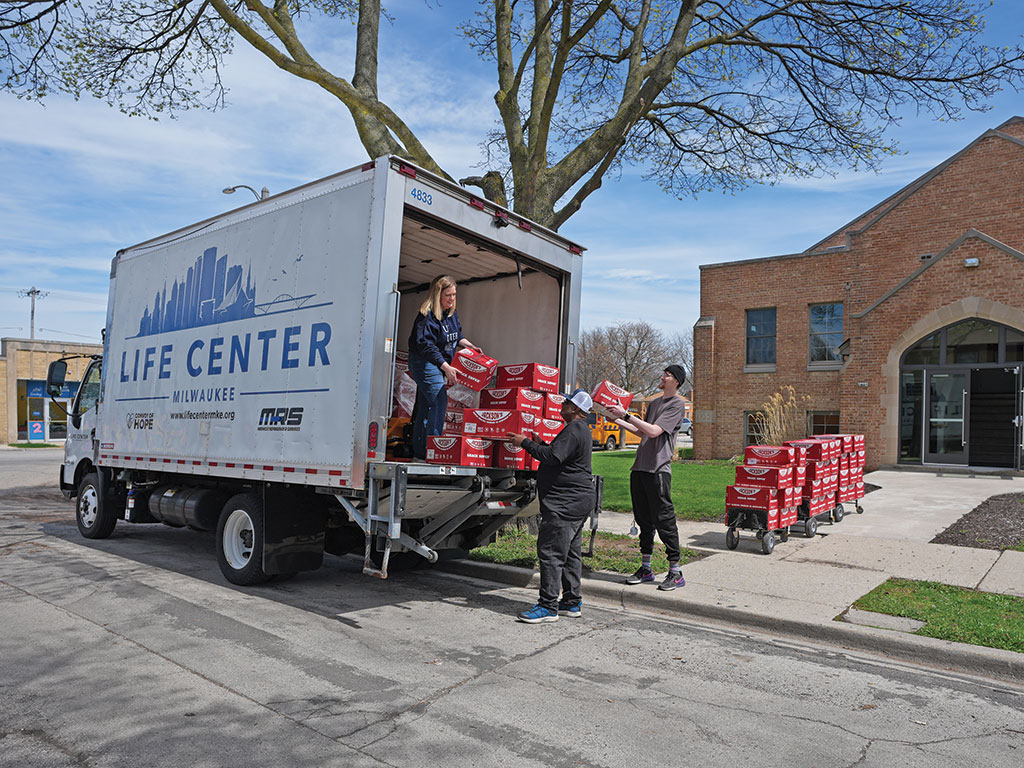
Life Center Milwaukee, a small food bank that started in 2019, was looking to build its capacity to serve more food pantries and deliver more food but needed a refrigerated box truck to do so.
“Receiving a grant from the Foundation was a breath of hope,” said Tara Ingham, food bank director. “It provided a vote of confidence to additional donors and volunteers going forward. They know that if the Foundation believes in what you are doing, they can easily, too.”
In recent years, the Foundation has taken a more trust-based philanthropy approach, Breen said.
“We approach nonprofits as the subject matter experts,” Breen said. “How can we advocate and allocate dollars to make the biggest difference?”
One example is multi-year general operating grant support. This type of funding provides organizations such as Ebenezer Stone Ministries with the flexibility needed to conduct its core mission. It received a three-year, $150,000 grant to support its hot meals program and warehouse and food pantry operations.
Unrestricted grant support also helps fuel innovative approaches like that of the People’s Table, a 20-year-old food pantry on Milwaukee’s south side that serves 500 families a month and also introduced a food collective concept. Under the model, which it started in 2019, members meet once or twice a month and unload the food trucks, sort inventory, share a potluck meal and access community resources. The organization operates four collectives and hopes to create more.
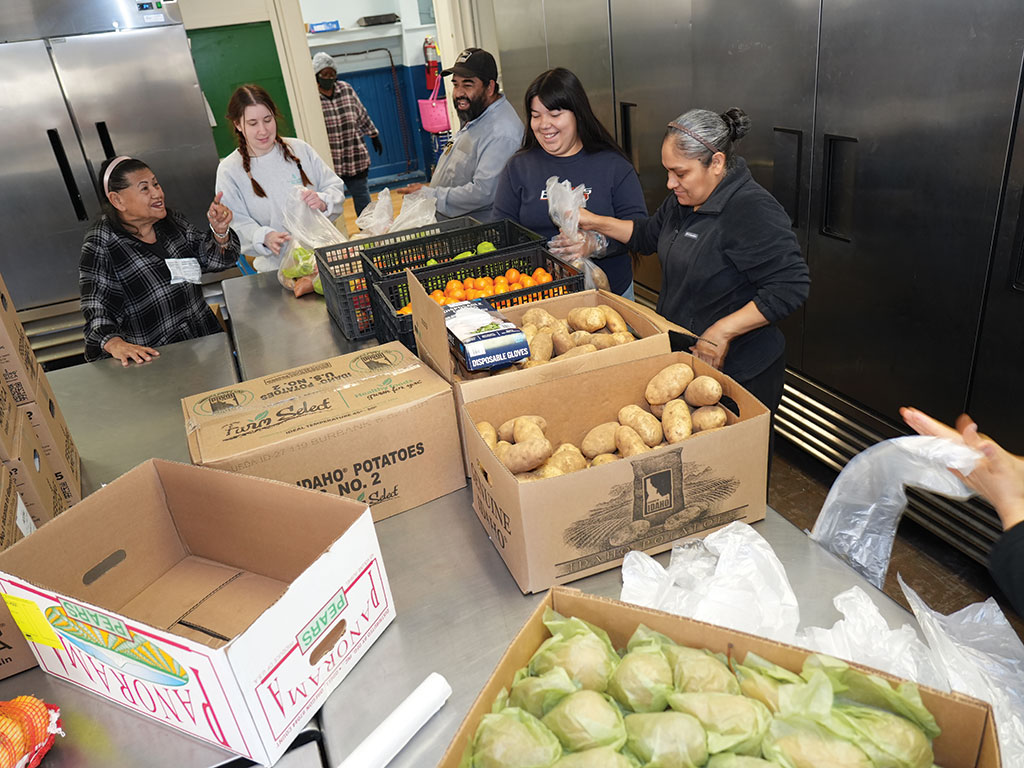
“It is one of the ways that we can provide a holistic approach to addressing the needs of the human person,” said Jack Bolog, director of operations.
As the food collective does not operate like a typical food pantry, the nonprofit is ineligible for government funding, which makes philanthropic support essential. The Foundation provided $90,000 in general operating support last year to fund the work.
“The Foundation is one that you can always turn to if you have an idea,” said Wendy Weckler, former executive director of Hope House who now is leading Milwaukee’s Continuum of Care, a collaborative of housing and shelter providers.
Several years ago, the Foundation and United Way approached the Continuum of Care to ask about the biggest need facing shelters. Nonprofits said funding for a community case manager would help prevent many individuals and families from becoming homeless. The nonprofits selected Guest House and Pathfinders to steward the grants, and the two funders pooled resources to support the case manager role as well as a flexible source of funding that case managers could use to support clients’ immediate expenses, such as utility payments and security deposits.
“It is that flexible funding that allows the program to be so successful,” Bauer said.
Deepening engagement and investment in community
The Foundation does not work alone in its support of the housing and food sectors. Deep trust and engagement with donors along with close partnerships with local funders help fuel efforts to address challenges that arise.
“There is a tremendous number of very generous people in our community, and the Foundation is able to connect those generous people with nonprofits that need that support,” said Lyndsay Johnson, executive director of the Food Pantry of Waukesha County. Over the years, her agency has become more reliant on food drives and private donations. The agency has received more than $600,000 in support from the Foundation and its donors over the past three decades.
In November 2025, when FoodShare benefits were delayed due to the extended government shutdown, the Foundation convened several area funders as well as the Hunger Task Force and Feeding America to assess the needs. This led to grants to the area’s two largest food banks to support additional food purchasing. The Foundation also contacted members of the Greater Milwaukee Food Pantry Coalition to quickly assess the local impact. It compiled a list of nearly 70 area food pantries, which it added to its website and shared with donors.
Donors, particularly those who live out of the area but support causes in Milwaukee, depend on that depth of knowledge of the local landscape.
“I want the money to do the very most it can in the right places — for that I rely on the Foundation,” said the adviser to the Catherine and Walter Lindsay Foundation Fund, who lives out of state. She has contributed to individual providers such as the Guest House and Food Pantry of Waukesha County as well as has given $150,000 to the Basic Needs Fund after her philanthropic adviser shared news of the local food security crisis.
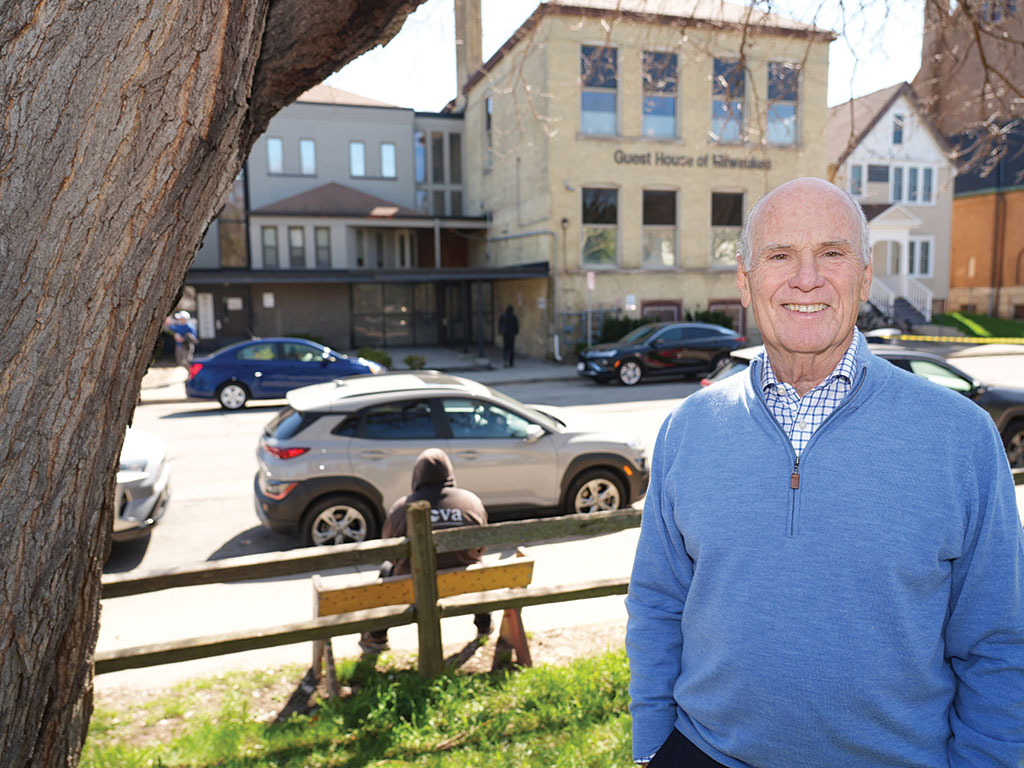
The Foundation also has raised awareness among its donors of critical issues such as homelessness, said Pat Dunphy, who has had a donor advised fund since 2015. His fund primarily supports Jesuit education and the Guest House, and he has provided matching funds to encourage others to give. Based on a suggestion from his philanthropic adviser, he also set up a designated fund for the Guest House.
“My donor advised fund creates the opportunity to reach out to other donors and inform them of the root causes. Their willingness to match funds is so important to support individuals who deserve help and to be treated with understanding and dignity,” said Dunphy, who also chairs Guest House’s board.
For the Milwaukee Rescue Mission, which doesn’t receive federal funding, individual donor support becomes even more vital. On any given night, the 133-year-old agency serves more than 200 men, women and children in its various shelter programs. It served 14 percent more people last year than in 2024.
“Donor advised funds and direct support from the Foundation has been an enormous resource for us,” said Patrick Vanderburgh, the nonprofit’s president.
The organization has more than 30,000 regular contributors, and it was one of the top 10 agencies to which Foundation donors gave in 2025. One of the Foundation’s designated funds has provided more than $9 million to the agency since 1994.
From short-term response to long-term vision of systems change
The Foundation has a history of responsive grantmaking for immediate food and shelter needs. For many years, it has provided support for overnight warming shelters, which serve about 250 individuals on an average night in the winter.
But the Foundation also remains steadfast in its commitment to create more equitable systems. The Greater Milwaukee Food Pantry Coalition is a more recent development that aims to do just that. In 2024, Foundation staffer Breen started having conversations with individual food pantries and held a summit. In 2025, she began convening pantries quarterly to discuss issues and challenges.
“Food pantries are very often the front lines for addressing issues people are facing in their lives,” said Bolog of The People’s Table. “The goal is just to bring food pantries together, leverage our collective resource pool, and from there make long-term, lasting impact in the Milwaukee area.”
The Foundation also believes that an informed community is a stronger community and that knowledge and awareness create change. Toward that end, in 2025, it made a $150,000 grant to fuel the continued growth of the Milwaukee Neighborhood News Service’s basic needs reporting, which began during COVID to address urgent food and housing needs in Milwaukee’s Black and Brown communities, as well as the news service’s multimedia storytelling capabilities. Under development is a Foundation-commissioned study that will focus on food access in Milwaukee. Foundation leadership hopes it will generate insights and identify potential opportunities for coordinated investment to help create a more equitable food system in the region.
“Funders are never able to plug all the holes, but if we can have targeted investments, hopefully we can ease the situation,” Breen said. “We are trying to listen and respond and build things that can create a better future — a Milwaukee for all.”